
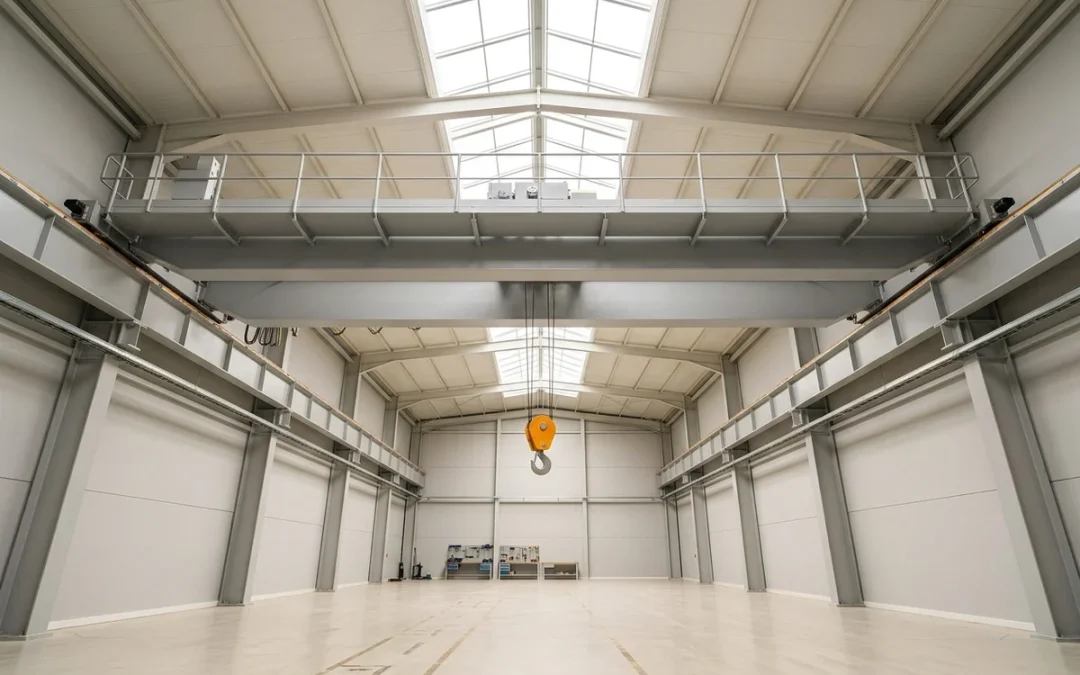
For most plants, the annual inspection of lifting equipment is a fixed date in the calendar. Done well, it takes a few hours and ends with the crane back in service. Done badly, it ends with a list of findings, a stopped machine and an urgent call to a service company. The difference is almost always preparation. This guide covers what inspectors look at, which documents to have ready, and which problems we see most often before they turn into findings.
What the inspection is for
Cranes and hoists are classed as equipment with increased hazard. The owner or user is responsible for keeping them in safe working condition, and the technical supervision inspection confirms that this is actually the case. The inspector checks the condition of the machine, its safety devices, and the records showing that it has been maintained, repaired and operated correctly.
The inspection is not an exam you can cram for on the day. It reflects the condition of the crane over the whole year, and the quality of the paperwork kept alongside it.
Start with the documents
Many findings have nothing to do with the crane itself. Missing or incomplete records are among the most common reasons an inspection runs into trouble. Before the visit, check that you have:
- the technical documentation and manufacturer’s instructions for the crane or hoist;
- the registration documents and the results of previous inspections;
- the repair and maintenance log, with entries that are dated, signed and specific;
- records of work done by external service companies, including who performed it and under what authorisation;
- operator and slinger qualification records and the instructions for safe operation;
- the documents for any recent repair, modification or replacement of components.
The repair log deserves particular attention. Vague entries such as “checked, OK” help nobody. Write what was inspected, what was replaced, with which part, and who did it.
Do a visual walk-around before the inspector arrives
A careful look at the crane a week or two before the date finds most of what an inspector would find. Walk the full length of the runway and check:
- Hook and hook block: no cracks, no visible deformation, no excessive wear in the throat, safety latch working, markings legible.
- Ropes or chains: no broken wires, kinks, corrosion or stretched links; correct lubrication; secure end fixings.
- Brakes: the load holds without drift, linings are within wear limits, adjustment is correct.
- Limit switches and safety devices: upper and lower hoist limits, travel limits, buffers and end stops all work as intended; overload protection is functional where fitted.
- Wheels, rails and runway: wheel flanges not worn through, rails secure and aligned, no cracks in welds or structure.
- Electrical equipment: cables and festoon system undamaged, enclosures closed, earthing intact, pendant or radio control working, emergency stop functioning.
- Markings and signs: rated load clearly visible on the crane and hook, warning signs in place.
Take photos of anything doubtful and note it down. Small issues are cheap to fix now and expensive to explain later.
Test the safety functions, not just the movements
A crane that lifts and travels smoothly is not necessarily a safe crane. Test the emergency stop, the limit switches and the warning signals deliberately, one at a time, with the crane unloaded. If your crane has a load limiter, check that it responds correctly. A safety device that has never been tested may be disabled, bypassed or simply worn out without anyone noticing.
The most common findings we see
Across the cranes and hoists we service, the same problems keep appearing:
- incomplete or poorly kept repair logs;
- worn hooks, chains or ropes that stayed in service too long;
- brakes out of adjustment or with worn linings;
- limit switches bypassed, broken or never tested;
- damaged cabling and loose or missing cover plates;
- unreadable load markings;
- runway rails and fastenings that have loosened over time.
None of these are exotic. Nearly all of them can be avoided with regular maintenance and a few hours of preparation.
Prepare the day itself
A smooth inspection day depends on a few practical points. Make sure the crane is free of production load and the working area is cleared and safe. Have a responsible person present who knows the machine and can answer questions about its history. Arrange access to the runway, platforms and electrical panels. If a test load is needed, plan for it in advance so that production is not disrupted.
It also helps to have your service company on hand or at least reachable. If a small issue appears, it can sometimes be fixed on the spot, avoiding a stopped crane.
What to do if the inspection finds problems
Treat a finding as a work order, not as an accusation. Ask for the findings in writing, agree on what must be done and by when, and do not return the crane to service where the inspector has forbidden it. Have repairs carried out by a qualified company, record them properly in the repair log, and keep the evidence for the next inspection.
A short pre-inspection checklist
- Documentation and previous inspection records found and complete
- Repair and maintenance log up to date, signed and specific
- Operator and slinger qualifications confirmed
- Hook, ropes or chains, brakes and wheels checked visually
- Limit switches, emergency stop and overload protection tested
- Electrical equipment and cabling checked
- Rated load markings and warning signs readable
- Runway clear, access arranged, responsible person available
How we can help
Remaks-Stal maintains and repairs overhead cranes and hoists, and we are registered with the technical supervision authority for maintenance and repair of lifting equipment. We can carry out a pre-inspection check before your date, fix the issues we find, bring your repair log up to standard and support you on the day of the inspection. Many of our customers also use a regular service agreement so that the inspection is a routine event, not an emergency.
If an inspection is coming up, send us the crane type, load capacity, location and the date. We will arrange a site visit and tell you what needs attention.